

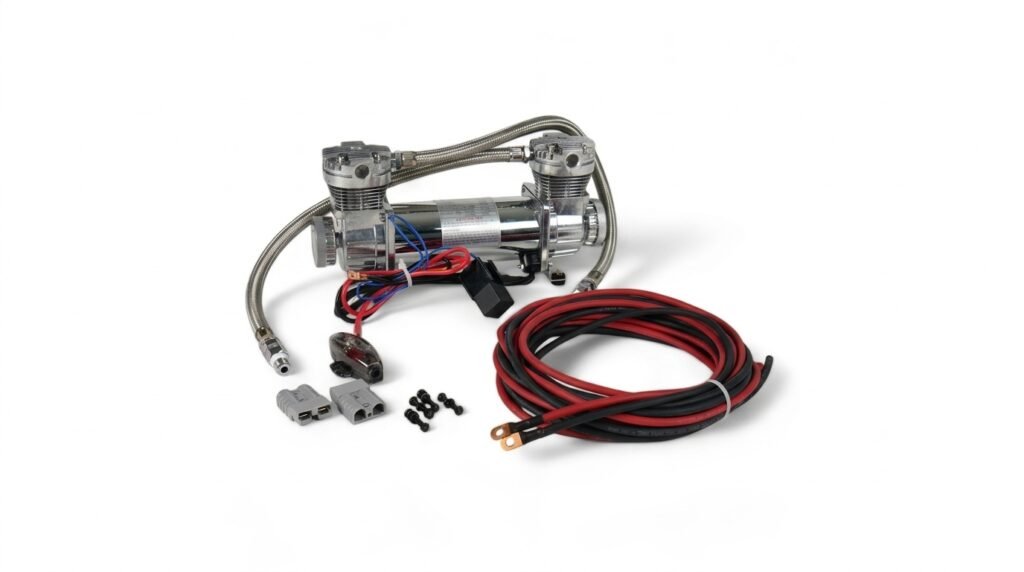
Online marketplaces are flooded with compact 12V gadgets labeled as “train horns for trucks.” These units claim to deliver locomotive-grade sound output in a tiny, direct-wire package without needing an air tank or pneumatic compressor.
When evaluating an electric horn vs train horn system, the difference is not just volume—it comes down to acoustic physics, internal engineering, and structural longevity. A miniature 12V electromagnetic buzzer or mini-motor fan cannot recreate the multi-chime blast of a genuine pneumatic horn.
Here is the engineering breakdown of how these systems operate, why cheap electric setups fail to deliver, and what makes a handcrafted, pneumatic air system built in Florida the benchmark for real road presence.
1. How Sound Is Generated: Direct 12V vs. Compressed Air
The primary distinction between an electric horn and a true pneumatic train horn lies in the energy source driving the sound waves.
┌────────────────────────────────────────────────────────┐
│                   HOW THEY WORK                        │
├──────────────────────────┬─────────────────────────────┤
│ 12V Electric Horn        │ Real Pneumatic Train Horn   │
├──────────────────────────┼─────────────────────────────┤
│ Battery -> Solenoid /    │ High-Pressure Tank (150 PSI)│
│ Mini Motor -> Thin Metal │ -> Heavy Solenoid Valve     │
│ or Plastic Diaphragm     │ -> Solid Hand-Poured Bells  │
└──────────────────────────┴─────────────────────────────┘
The 12V Electric Mechanism
Standard vehicle horns and direct-electric aftermarket accessories use a small electromagnetic coil to oscillate a thin steel diaphragm back and forth. Some models feature a tiny integrated fan intended to act as a micro-compressor. Because the volume of air moved is virtually zero, these units produce a flat, high-pitched buzz rather than a deep, resonant rumble.
The Pneumatic Air System
A true locomotive-style horn relies on stored pneumatic energy. An onboard compressor pressurizes a dedicated steel air tank to 150–200 PSI. When the electric solenoid valve snaps open, that high-pressure air bursts across heavy-duty internal diaphragms, forcing massive cubic feet per minute (CFM) through precision acoustic throats. This produces the harmonic resonance heard from full-size diesel freight engines.
2. Decibel Ratings: Marketing Claims vs. Real-World Output
Many inexpensive 12V horns advertise output levels of “150 dB” or even “300 dB.” In acoustic physics, sound pressure increases exponentially: every increase of 10 decibels represents a tenfold surge in acoustic sound intensity.
According to sound measurement standards documented by educational resources like The Physics Classroom, producing genuine sound levels above 140–150 decibels requires serious mechanical energy. Industrial exposure standards enforced by the Occupational Safety and Health Administration (OSHA) place peak impulse sound caps at 140 dB due to the extreme kinetic force of these sound waves.
-
Electric 12V Horns: In real-world decibel meter testing at a standard distance (1 meter), typical 12V electric horns peak between 100 dB and 112 dB. Their sound dissipates rapidly across highway traffic.
-
USA Train Horn Pneumatic Kits: Operating on 150 PSI of dry compressed air, genuine multi-bell horns easily deliver 150+ true decibels. The low-frequency fundamental tone carries over distances exceeding one mile.
3. Materials & Build Quality: Plastic Shells vs. Hand-Cast Aluminum
Sound resonance is determined by the material surrounding the acoustic column.
-
Imported 12V Horns: These units rely heavily on thin ABS plastic bodies or pot metal castings. Under normal road vibrations, high engine-bay heat, and gravel impacts, plastic housings warp, crack, and lose internal seal pressure.
-
Handcrafted in USA Systems: Every horn bell in our lineup is cast using solid 319.1 aluminum alloy, hand-poured right here in Florida. The heavy bell walls eliminate body distortion and flex, turning every bit of compressed air into acoustic authority. Completed with marine-grade stainless steel fasteners, these assemblies will not crack or corrode under severe off-road driving.
To explore the lineup of hand-cast assemblies, visit our complete USA Train Horn inventory.
4. Side-by-Side Comparison
| Feature | 12V Electric Horn Kits | USA Train Horn Pneumatic Systems |
| Acoustic Driver | Electromagnetic coil / Micro-fan | High-pressure pneumatic air blast |
| Operating Pressure | 0 PSI (Direct electrical) | 110 – 150+ PSI stored reserve |
| Bell Construction | Injection-molded ABS or stamped tin | Hand-poured 319.1 cast aluminum |
| Acoustic Tone | High-pitch squeak / Car-like chirp | Deep, multi-chime freight locomotive roar |
| Highway Audibility | Lost under engine & road noise | Audible past 1–2 miles |
| Harsh Weather Durability | Prone to diaphragm burnouts & cracked bells | Impervious to weather, mud, and vibration |
| Onboard Utility | Horn blast only | Expandable for tire inflation and air tools |
5. The Real Verdict: Why Air Always Wins
A 12V electric horn may work as a secondary alert for golf carts or small sedans, but on a full-size pickup or commercial rig, it fails to deliver the commanding voice needed on the road.
A pneumatic train horn is a complete industrial setup. In addition to delivering immediate safety signaling in low-visibility or high-speed driving conditions, an onboard air system provides extra utility—such as airing up truck tires on trails or powering pneumatic emergency gear.
Every horn kit leaving our shop is backed by clear protection policies detailed in our product warranties, ensuring your setup performs blast after blast.