

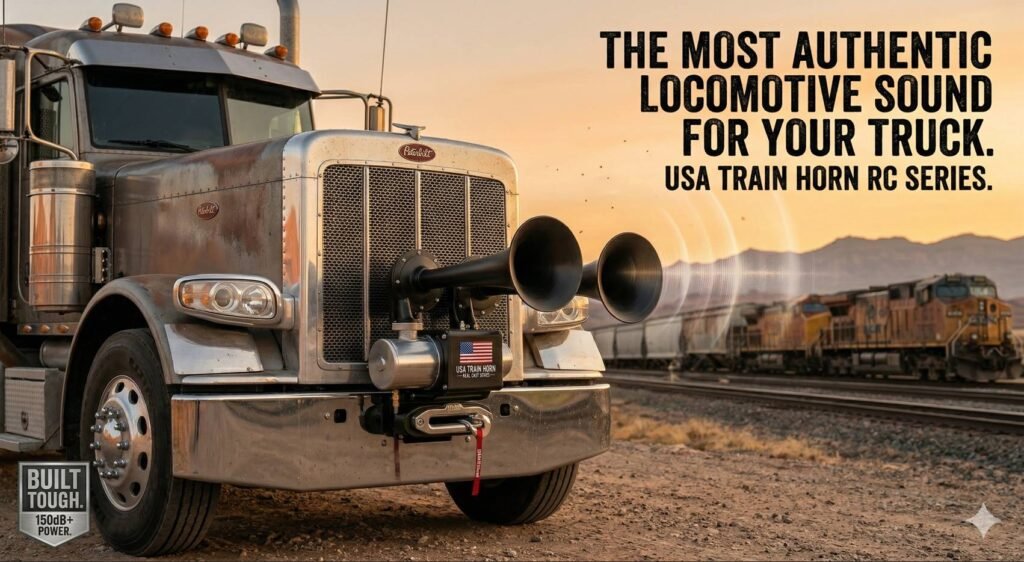
Is your truck’s horn loud enough to be heard, or just loud enough to be ignored?
In 2026, the aftermarket horn industry has been flooded with cheap, high-pitched alternatives that claim 150dB but sound more like a semi-truck than a 400-ton locomotive. If you are looking for that bone-rattling, authentic chime, the material of your horns matters more than the decibel rating on the box.
The Science of Sound: Why Cast Aluminum Matters
Most entry-level kits use plastic or thin metal trumpets. While they save weight, they fail to resonate at the low frequencies required for a true train sound. Our RC (Real Cast) Series is engineered using heavy-duty cast aluminum for three specific reasons:
-
Purity of Tone: Unlike plastic, aluminum doesn’t vibrate inconsistently. It provides a stable, deep resonance that mimics the legendary Nathan AirChime used by real railroads.
-
Thermal Resilience: Air compressors and Florida heat don’t mix well with plastic. Cast aluminum handles extreme temperature shifts without warping or cracking.
-
Corrosion Resistance: For off-road enthusiasts and coastal drivers, salt and mud are “horn killers.” Our powder-coated aluminum finish ensures your investment sounds the same in year 5 as it did on day 1.
Decibels vs. Depth: Don’t Get Fooled by Numbers
Many competitors advertise 150dB+, but decibels only measure volume, not “authority.” A high-pitched whistle can hit 150dB and still sound annoying. A USA Train Horn focuses on the low-frequency “thump” that you feel in your chest—that’s the difference between a toy and a professional-grade air system.
Comparison at a Glance: 2026 Buyer’s Guide
If you’re modifying your truck, don’t compromise on the one part that defines its presence. A train horn isn’t just a gadget; it’s a safety tool and a statement.