

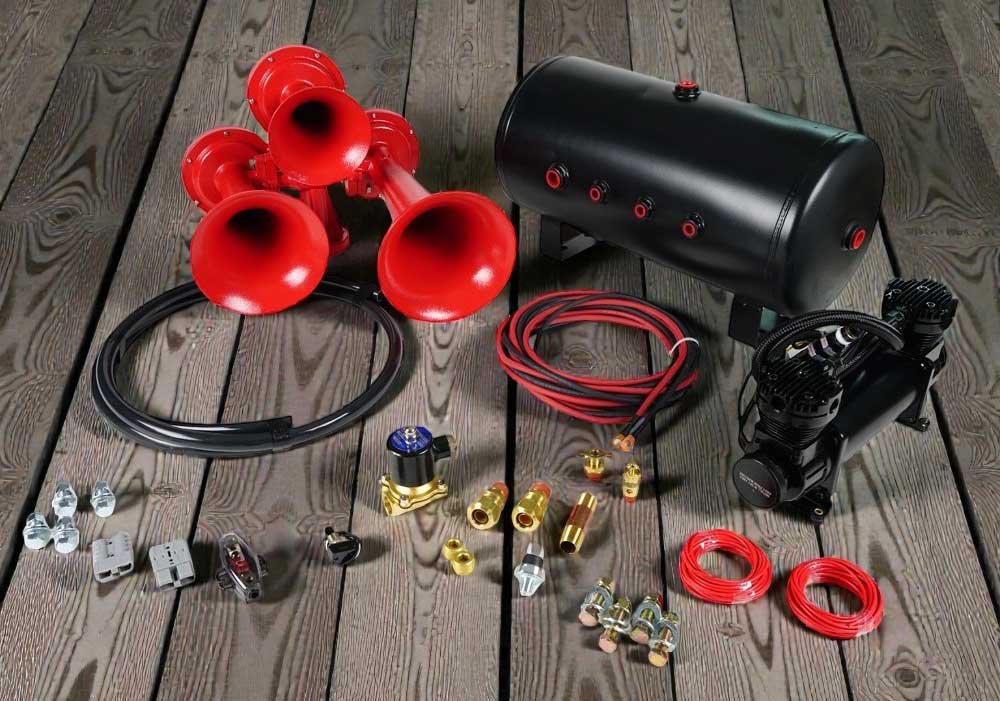
The Roar of Authority: Why a USA TRAIN HORN is a Statement, Not an Accessory
In an era of mass-produced, disposable plastic components, there is something profoundly powerful about metal forged with purpose. A USA TRAIN HORN is not simply a device for making noise; it is a precision-engineered instrument designed to be heard, respected, and, above all, to endure.
1. The Art of Power: Handmade in the USA
While the global market shifts toward cutting costs, we double down on perfection. Every single horn we produce is handmade right here in the United States.
What does this mean for you? it means that behind every blast is a craftsman who understands that precision is the difference between a harsh screech and a harmonic roar. we don’t just assemble parts; we build heavy-duty legacy equipment. When you choose USA TRAIN HORN, you are supporting American labor and uncompromising quality.
2. A Commanding Presence: Safety Through Sound
A common misconception is that a train horn is only for attention. However, on today’s roads, presence equals safety.
With distracted driving at an all-time high and modern vehicle cabins becoming increasingly soundproof, standard factory horns often go unnoticed. The low-frequency resonance of our horns cuts through ambient noise in a way that demands immediate awareness. Owning a USA TRAIN HORN is about ensuring that when you need to be heard, there is no doubt about your position. It is the voice of your vehicle reclaiming its space.
3. Heavy-Duty Engineering for the Real World
Our equipment is built for the most hostile environments. From the dust of rural backroads to the salt-slicked highways of winter, our high-resistance materials ensure that performance never degrades.
-
Zero Corrosion: We select premium materials designed to withstand the elements.
-
Mechanical Reliability: Optimized air systems for instantaneous response every time.
-
Extreme Durability: Built to outlast the vehicle they are installed on.
4. An Investment in Identity
Installing a USA TRAIN HORN on your car or truck is a rite of passage. It’s for those who refuse to settle for “standard.” It’s for the business owner who values gear that doesn’t fail and for the enthusiast who understands that a vehicle’s character is defined by the details—the ones you can feel in your chest.
“We don’t make toys. We manufacture the gold standard in audible warnings.”
Frequently Asked Questions
1. What truly sets a USA TRAIN HORN apart from cheaper, mass-produced alternatives? The difference lies in the soul of the product: materials and craftsmanship. While many competitors use thin plastics or cheap alloys that crack and corrode, our horns are hand-built in the USA using high-resistance metals. We don’t just focus on “noise”—we focus on a tuned, harmonic resonance and a build quality that ensures your investment lasts for years, not just months.
2. Can these systems withstand extreme weather and heavy-duty environments? Absolutely. Our equipment is engineered specifically for the elements. Whether it’s the intense humidity of the South, the freezing road salt of the North, or the vibration of off-road trails, our heavy-duty construction is corrosion-resistant and vibration-tested. We build them to be as tough as the trucks they are mounted on.
3. Is a train horn more about “loudness” or “safety”? While our horns are undeniably powerful, the primary goal is effective communication. Modern vehicles are built with incredible soundproofing, meaning a standard factory horn often goes unheard in emergency situations. A USA TRAIN HORN provides a low-frequency command that cuts through cabin insulation and road noise, providing an extra layer of safety by ensuring you are noticed when it matters most.