

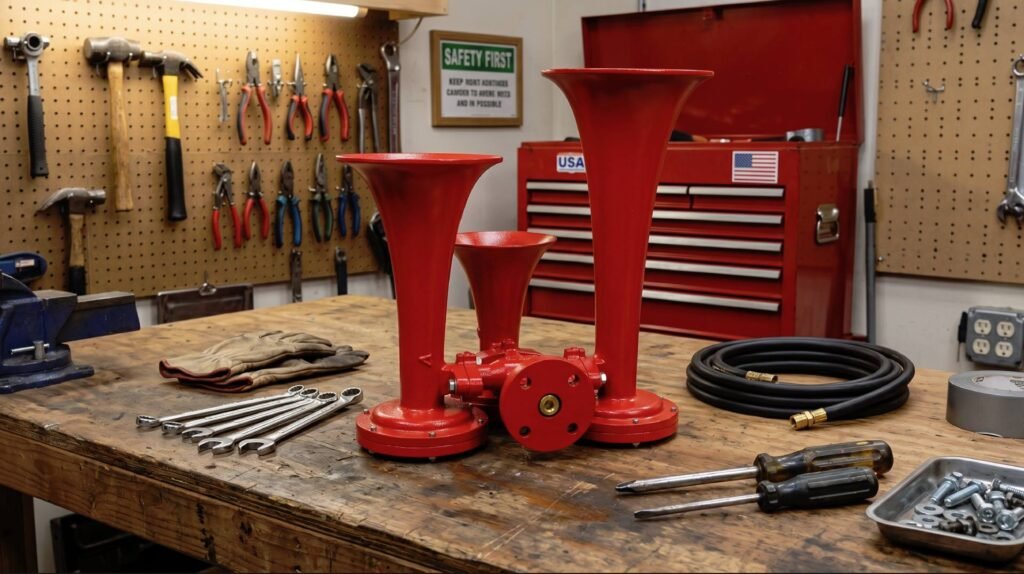
Handmade American‑Made Train Horns vs. Imported Horns: What Really Sets Them Apart
In the world of automotive train horns, not all products are created equal. The difference between hand‑cast, American‑made horns and mass‑produced imported horns goes far beyond price. It’s a matter of materials, craftsmanship, sound quality, durability, and long‑term value.
If you’re choosing a horn for your truck, car, or custom build, understanding these differences will help you avoid costly mistakes — and choose a horn that will last a lifetime.
1. Materials: Cast Aluminum vs. Thin Metal or Plastic
American‑made horns are built from solid, hand‑cast aluminum, a material chosen for its strength, acoustic resonance, and resistance to corrosion. Imported horns are typically made from:
- Thin stamped metal
- Low‑grade alloys
- Plastic trumpets
- Mixed components that weaken over time
Why it matters: Cast aluminum produces a deeper, fuller, authentic train‑horn tone and withstands heat, vibration, and weather conditions that destroy cheaper imports.
2. Craftsmanship: Hand‑Built vs. Mass‑Produced
American manufacturers — especially small specialized factories — build horns one at a time, ensuring:
- Perfect trumpet alignment
- Precision‑machined internals
- Consistent air flow
- Quality‑controlled welds and fittings
Imported horns are produced in bulk, often with:
- Inconsistent tuning
- Poorly aligned trumpets
- Air leaks
- Weak brackets and hardware
Result: Handmade horns deliver true locomotive sound, while imported horns often sound thin, uneven, or harsh.
3. Sound Quality: Authentic vs. Artificial
A real train horn has a deep, powerful, harmonically rich tone. American‑made horns replicate this by using:
- Correct bell geometry
- Proper trumpet length
- High‑grade aluminum resonance
- Precision tuning
Imported horns often rely on:
- Shorter trumpets
- Incorrect bell shapes
- Low‑quality diaphragms
This produces a sound that is loud but not authentic — more like a cheap air horn than a real locomotive.
4. Durability: Lifetime vs. Disposable
American‑made horns are engineered to last decades, not months. They feature:
- Stainless steel hardware
- Powder‑coated finishes
- Replaceable parts
- Lifetime warranties
Imported horns typically fail due to:
- Rust
- Cracked trumpets
- Weak diaphragms
- Non‑replaceable components
When something breaks, the entire horn must be replaced.
5. Safety & Reliability: Precision vs. Risk
A poorly built horn can:
- Leak air
- Fail under pressure
- Produce inconsistent sound
- Break while driving
Hand‑built American horns undergo pressure testing, tuning, and inspection before leaving the factory. Imported horns rarely meet these standards.
6. Long‑Term Value: Investment vs. Expense
While imported horns may seem cheaper upfront, they often require:
- Frequent replacements
- New brackets
- New diaphragms
- Upgraded compressors
A handmade American horn is a one‑time investment that delivers:
- Better sound
- Better performance
- Better reliability
- Better resale value
Conclusion: Why American‑Made Train Horns Win Every Time
If you want a horn that is:
- Truly loud
- Truly authentic
- Truly durable
- Truly American
…then a hand‑cast, American‑made train horn is the only choice.
Imported horns may look similar online, but the difference becomes obvious the moment you hear them — and even more obvious after a few months of use.
Quality isn’t just a feature. It’s the sound of craftsmanship.
Ready to hear the difference for yourself? Explore our full lineup of handmade, American‑made train horns and find the perfect model for your build.
Visit our complete online inventory today and upgrade your sound with real craftsmanship.