

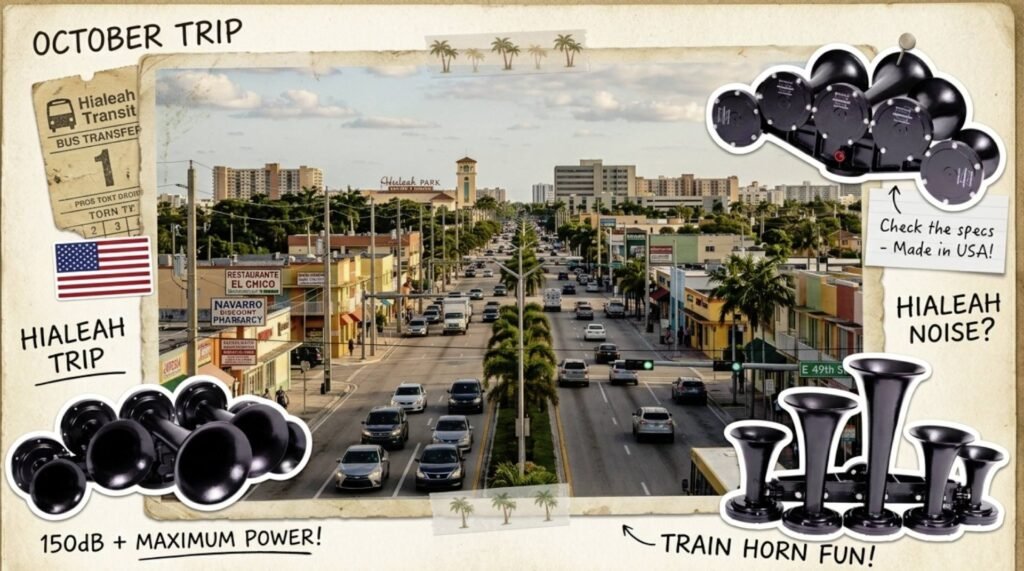
Every USA Train Horn starts the same way: as raw aluminum in our shop in Hialeah, Florida. By the time it leaves, it has been cast, machined, assembled, tested and finished by the same small team, and then it ships to a truck, a pickup or a fleet somewhere in the United States.
This post takes you inside that process. It doesn’t compare us with imported horns. We cover that in Handmade American-Made Train Horns vs. Imported Horns. Here we just show what happens to a horn before it gets to you.
Why we build everything in one place
Most horn kits sold online are assembled from parts made by different suppliers. We went the other way. Casting, machining, finishing and testing all happen under one roof in Hialeah. That gives us control over the two things that matter most in a train horn: how it sounds and how long it lasts.
It also means that when something goes wrong, we know exactly how that part was made, and we can replace it.
Step by step: how a USA Train Horn is made
1. Hand-casting the trumpets and manifold
Each trumpet and manifold is hand-cast in aluminum. Casting gives the bells a thick, dense wall, and that wall shapes the deep, full tone people expect from a real train horn. If you want the physics behind it, read The Science Behind Train Horn Loudness.
2. Processing and inspection
After casting, every piece is cleaned up, processed and checked by hand. A part that doesn’t meet our standard never moves on to the next step.
3. Machining the caps
The caps (lids) are machined from billet aluminum, so they fit precisely and seal tightly. A good seal keeps air pressure where it belongs, in the horn and not leaking out.
4. Assembly with stainless hardware
Each set is assembled one at a time with stainless steel hardware, which holds up against rain, road salt and constant vibration.
5. Sound testing
Every unit is tested individually before it’s finished. If it doesn’t sound right, it doesn’t ship.
6. Textured powder-coat finish
Last comes the finish: a textured powder coat in black or red, the two looks of our RC Series (the Black Line and the Red Line). The coating protects the aluminum from sun, humidity and road debris, so the horn keeps looking good for years.
What happens after it leaves the shop
Building the horn is only half the job. Because we make every component ourselves, we also stand behind it:
- Lifetime warranty against manufacturing defects. See Warranty & Returns.
- Replacement parts for everything: trumpets, manifolds, valves, fittings and hardware. If you break one horn off your set, you replace that part, not the whole kit.
- Maintenance help: our guide How to Maintain & Troubleshoot Your Truck Air Horn System covers leaks, solenoids and draining the tank.
From Hialeah to the whole USA
We ship directly from our shop to customers across the country, from owner-operators upgrading a semi to pickup owners who want a real train horn sound. Before you install one, it’s worth checking your state’s rules in Are Train Horns Legal on Your Truck?
For shops, installers and distributors
If you sell or install horns for your customers, our Wholesaler Program gives B2B partners direct access to the same horns we build for retail customers. Apply for a wholesale account.
See what we’re building
Every horn in our catalog went through the six steps above in Hialeah. Browse the RC Series Black Line and Red Line, or contact us if you have a question about which set fits your vehicle.