

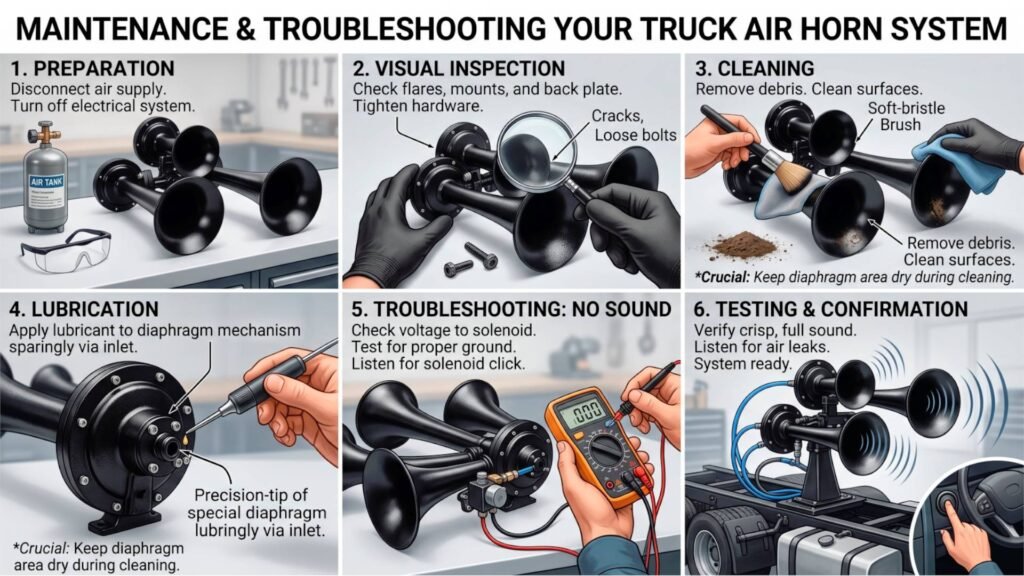
Installing a heavy-duty train horn on your truck delivers an undeniable sound of authority. While top-tier systems, built with hand-cast aluminum trumpets, machined aluminum covers, and stainless steel hardware, are engineered to withstand extreme road abuse, the pneumatic and electrical components feeding them still require basic care.
An air horn system relies on a high-pressure loop: compressor, air tank, solenoid valve, and tubing. If one link in that chain degrades, you lose sound quality, volume, or air pressure.
Whether you are performing routine maintenance or troubleshooting a loss in PSI, this guide walks you through maintaining your air system to keep it firing at peak decibels year-round.
1. Preventing and Locating Air Leaks
A pressure leak is the most common issue in truck air systems. If your air compressor kicks on frequently when you aren’t using the horn, or if your air tank bleeds off pressure overnight, you have a leak.
The Soap & Water Test
Finding a microscopic leak in a high-pressure line is simple:
-
Fill your air tank to its maximum working pressure (typically 150 to 200 PSI).
-
Shut off the vehicle engine so you can listen clearly.
-
Mix standard dish soap with warm water in a spray bottle.
-
Spray every fitting, line connection, pressure switch threads, check valve, and drain valve.
-
Watch for growing bubbles. A leak will create continuous soap bubbles within seconds.
Fixing Common Leaks
-
Push-to-Connect Fittings: Cut the airline completely square using a sharp hose cutter or razor blade. An angled cut will compromise the internal O-ring seal.
-
NPT Threaded Joints: Never rely on bare metal threads. Apply 2 to 3 wraps of PTFE thread tape (wrapped clockwise) or a medium-strength liquid thread sealant before installing fittings into your tank, compressor, or manifold.
-
Chafed Air Tubing: Inspect DOT-approved air lines along the truck frame rail. Make sure tubing isn’t rubbing against sharp metal chassis edges or routed too close to heat sources like the exhaust manifold.
2. Solenoid Valve Maintenance & Electrical Care
The solenoid valve acts as the gatekeeper. When you trigger the horn, an electromagnetic coil lifts an internal valve plunger, releasing a massive burst of stored air into the horn manifold.
Cleaning a Stuck Solenoid
If your compressor maintains pressure but no air passes through the horns when activated, or if air constantly leaks through the trumpets, the solenoid valve needs attention.
-
Debris Accumulation: Small metal filings, Teflon tape scraps, or dirt from uncleaned air lines can get caught between the rubber plunger seal and the valve seat.
-
Servicing: Disconnect power, depressurize the air tank completely, and unscrew the valve housing. Clean the internal diaphragm, spring, and plunger with contact cleaner or a lint-free cloth, inspect the rubber seal for tears, and reassemble.
Electrical Checks
If pressing your horn switch results in total silence:
-
Check the inline fuse on your main power wire leading from the battery to the relay.
-
Inspect the ground connection. Paint, rust, or dirt on the frame where your horn system is grounded will cause intermittent voltage drops.
-
Verify relay operation: listen for a distinct “click” from the relay when the horn button is pressed.
3. Air Tank Moisture Management
Compressing ambient air generates heat and concentrates atmospheric humidity. As pressurized air cools inside your storage tank, water condenses at the bottom.
Ambient Air → Compressor → Heat & Pressure → Tank Cooling → Water Condensation
Why Draining Your Tank Matters
-
Volume Loss: Water occupying space inside the tank reduces total air volume, causing shorter blast durations.
-
System Damage: Water pushed through air lines can enter the solenoid valve or reach internal diaphragms, causing rust in iron components or mineral buildup.
Maintenance Routine
Open the manual drain valve at the bottom of your air tank at least once every two weeks (or weekly in humid climates). Allow all trapped water and sludge to blow out until only clean, dry air escapes.
4. Cold Climate & Winterization Guide
Sub-zero temperatures pose specific challenges to high-pressure air horn systems. Trapped moisture inside lines or valves can freeze, locking the solenoid shut or causing pressure drop errors.
Winterizing Steps for Truck Owners
-
Thorough Drain-Down: Perform a complete moisture drain before freezing temperatures arrive.
-
Air Brake Anti-Freeze / De-Icer: For severe winter environments, add a small splash (a few drops to half an ounce) of commercial air brake anti-freeze directly into the air tank through an inlet fitting. This lowers the freezing point of any residual moisture in the lines without damaging seals.
-
Protect the Compressor Filter: Ensure your compressor’s remote air intake filter is mounted in a dry location free from ice, snow slush, or direct road spray.
5. Built to Last: The Material Advantage
Not all air horn components react to road environment challenges the same way. Imported cast-zinc or cheap chrome-plated horns often suffer from pitted surfaces, flaking finishes, and cracked manifolds when exposed to highway road salt and moisture.
Opting for hand-cast aluminum construction, stainless steel hardware, and industrial-grade powder coating ensures the external horn assembly remains completely immune to rust and structural decay. Premium systems built with heavy-duty materials are designed to give you peace of mind on the road—especially when backed by a solid manufacturer warranty service. While internal air management requires routine maintenance, a solid cast-aluminum horn body is built to last the lifetime of your rig.
Quick Troubleshooting & Diagnostics Checklist
| Symptom | Probable Cause | Corrective Action |
| Compressor runs constantly | Air leak at fitting or check valve | Perform soap test; re-tape and tighten NPT threads. |
| Tank has full PSI, but horn won’t sound | Blown fuse, bad ground, or stuck solenoid | Check electrical relay/ground; clean solenoid valve core. |
| Horn sounds weak or raspy | Low tank PSI or restriction in main air line | Check pressure gauge; ensure air line isn’t kinked or pinched. |
| Air leaks out through the horn trumpets | Solenoid valve seat blocked open by debris | Disassemble solenoid and clean internal rubber seal/plunger. |
| Horn delays when button is pressed | Long or restrictive tubing run | Upgrade to a larger diameter air line or place valve closer to horns. |
Frequently Asked Questions
How often should I service my truck air horn system?
Inspect air fittings and perform a quick soap leak test every six months. Drain accumulated moisture from your air tank every two weeks, or more frequently during warm, humid weather.
Can cold weather ruin a train horn solenoid valve?
Cold weather itself will not ruin the valve, but frozen condensation trapped inside can block movement or damage the rubber seal if forced open while frozen. Draining the tank regularly prevents ice buildup.
Why does my air compressor take longer to fill the tank than before?
Extended run times usually indicate a worn compressor check valve, a clogged intake air filter, or a small air leak in the system allowing pressure to escape as the compressor builds it.
Looking to upgrade your setup or replace worn air system accessories? Explore our full train horn inventory of handcrafted, high-decibel systems. If you need technical assistance or custom build support, feel free to contact us directly.