

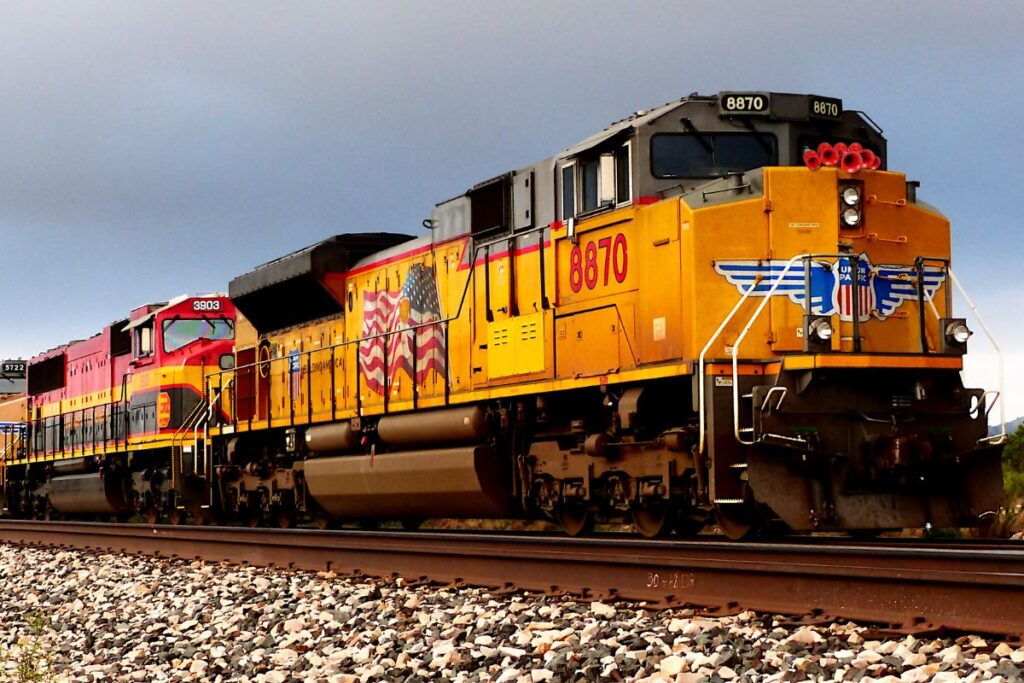
If you want the loudest train horn for your truck or car, the number on the box is only part of the story. Real loudness comes from the whole air system: the trumpets, the air pressure, the airflow, the tank and the way everything is installed. In this guide we explain how loud a train horn really is, what makes one horn louder than another, and how to build a setup that turns heads from blocks away.
We build our horns by hand in Hialeah, Florida, so everything below comes from the shop floor, not from a catalog.
How Loud Is a Train Horn? The Quick Answer
A real locomotive horn in the United States must produce between 96 and 110 dB(A) measured 100 feet in front of the train (federal rule 49 CFR 229.129). That is the volume at a long distance. Right next to the horn, the sound is far more intense.
Aftermarket train horn kits for trucks and cars are usually rated around 145 to 155 dB. Those ratings are measured very close to the horn, so they cannot be compared one-to-one with the railroad figure, but they tell you the horn is in a completely different league from a factory horn.
| Sound source | Typical level |
|---|---|
| Normal conversation | about 60 dB |
| Factory 12V car horn | about 100 to 110 dB |
| Locomotive horn (at 100 ft) | 96 to 110 dB(A), by federal regulation |
| Truck train horn kit (measured up close) | about 145 to 155 dB |
How Many Decibels Is a Train Horn? Decibels Explained
Decibels (dB) are a logarithmic scale, which is why small number changes matter so much:
- +10 dB sounds roughly twice as loud to the human ear.
- Sound drops about 6 dB every time the distance doubles.
- So a horn that is 30 dB louder than a factory horn is not “a bit louder”. It is in a different category.
Keep in mind that dB claims are only meaningful when you know the distance they were measured at. Two horns advertised at “150 dB” can sound very different on the street. That is why we focus on the things that actually create volume.
What Makes a Train Horn Loud?
1. Number and size of trumpets
Each trumpet produces its own note. Three to five trumpets together create the deep, chord-like sound of a real locomotive and move more air than a single bell. Longer trumpets produce lower, fuller tones that carry farther.
2. Air pressure (PSI)
Pressure is what drives the sound. Most quality train horn systems run between 100 and 200 PSI, with 150 PSI being a common sweet spot. Too little pressure and the horn sounds weak or “honky”; stable pressure gives a clean, powerful blast.
3. Airflow (CFM)
Pressure alone is not enough. The compressor, valve and air lines must deliver enough volume of air (CFM) to the horn. Narrow lines or a small valve choke the sound, even with a high-PSI tank.
4. Tank size
The tank is your air reserve. A small tank gives a short blast that fades fast. A 3 to 5 gallon tank keeps the volume up on long or repeated blasts. Our 5 gallon 8-port steel air tank is a popular choice for trucks.
5. Material and build quality
Cast aluminum trumpets resonate deeper and survive heat, vibration and weather far better than plastic. Plastic horns can sound loud out of the box but often crack, warp or lose tone over time. Learn more in our guide to handmade American-made train horns vs. imported horns.
For the full physics, read the science behind train horn loudness: PSI, decibels and airflow.
The Loudest Train Horns for Trucks
Pickups, SUVs and work trucks have the space for a full system, which is why the loudest setups live on trucks. For maximum volume, look for:
- 3 to 5 cast aluminum trumpets
- 150 to 200 PSI operating pressure
- A heavy-duty compressor (or twin compressors for faster refill)
- A 3 to 5 gallon tank
- Wide air lines and a high-flow solenoid valve
Good starting points are our RC 3H complete train horn kit and the four-trumpet RC 4L complete train horn kit. See every option in our complete train horn kits collection, or read why our handmade train horns for trucks are built in the USA.
The Loudest Train Horns for Cars
Cars have less space, so the goal is the most sound from a compact system. A one or two trumpet horn with a small tank and compressor can still deliver a huge jump over a factory horn. Mounting location matters: horns aimed forward and away from the engine bay sound noticeably louder. For ideas, see loudest train horns for your car.
What Comes in a Complete Train Horn Kit?
- Horn / trumpets: where the sound is made
- Air compressor: fills the tank (for example, our RC-880 heavy-duty compressor)
- Air tank: stores the air
- Solenoid valve: opens the air flow when you press the button
- Pressure switch, relay, wiring and air lines: control and connect the system
If you already have a horn, an install kit such as the twin compressor complete horn install kit gives you everything else.
Electric Horn vs. Air Train Horn
12V electric “train horns” are cheap and easy to install, but they cannot move enough air to match a real pneumatic horn in volume or depth. If you want true locomotive sound, you need an air system. We break it down in 12V electric horn vs. real train horn: the truth about decibels.
How to Get the Loudest Sound From Your Train Horn
- Keep pressure stable: set your pressure switch correctly and check the gauge.
- Fix air leaks: even a small leak lowers pressure and volume.
- Drain the tank regularly to remove moisture.
- Use proper line size and avoid sharp bends.
- Mount the horn facing forward with a clear path for the sound.
Step-by-step help: how to install a train horn kit on a truck and how to maintain and troubleshoot your air horn system.
Are the Loudest Train Horns Legal?
Laws vary by state and city. In many places you can own and install a train horn, but using it on public roads in place of your standard horn can be restricted, and many vehicles must keep a factory horn as well. Always check local rules before you install. Read our full guide: are train horns legal on your truck? Laws, decibels and fines.
Safety note: sound at these levels can damage hearing at close range. Never sound a train horn near people or animals, and use it responsibly.
Frequently Asked Questions
How loud is a train horn in decibels?
A locomotive horn must produce 96 to 110 dB(A) at 100 feet. Truck train horn kits are typically rated around 145 to 155 dB measured close to the horn.
What is the loudest train horn for a truck?
The loudest truck setups combine 3 to 5 cast aluminum trumpets, 150 to 200 PSI, a high-output compressor and a 3 to 5 gallon tank. The full system matters more than the dB number on the box.
Is a train horn louder than a car horn?
Yes. A factory car horn is around 100 to 110 dB, while a quality air train horn is dramatically louder and much deeper in tone.
Does more PSI make a train horn louder?
Up to the horn’s rated limit, yes. Stable pressure combined with enough airflow and tank capacity is what gives you the loudest, cleanest blast.
Build the Loudest Train Horn With USA Train Horn
Every USA Train Horn is hand-cast in aluminum, machined, tested and finished in our Hialeah, Florida shop. If you want a horn that sounds like the real thing and lasts, explore our train horn kits or contact us and we will help you choose the right setup for your vehicle.